

John Obama and Barack McCain: Two Very Different Men
September 5, 2008 by Paul McKeever · 9 Comments
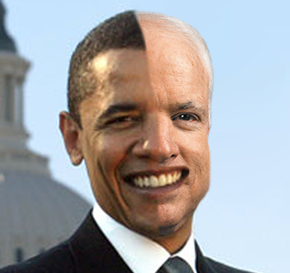 For those who did not have a chance, or the inclination, to watch the coverage for the Democratic and Republican conventions over the last couple of weeks, I am happy to provide this comparison of each party’s nominee for the office of President of the United States of America, based upon each man’s acceptance speech. I am not here providing a comparison of their proposed government policies: you can find those everywhere else. What I provide here is a comparison of the candidates’ philosophies, to the extent express statements allow me to perform one. The reason is simple: many of the decisions a president will make are not foreseen years, months, weeks, or even days in advance. By knowing their respective philosophical commitments, one can at least determine the general nature of policies which are, or are not, likely to be adopted in the future. Read more
NEW VIDEO – The Psychology of Green: The Death Cult of Zero Worship
July 15, 2008 by Paul McKeever · 3 Comments
 On July 9, 2008, I was the guest of “Just Right” with Robert Metz on radio CHRW (FM 96.8, London, Ontario, Canada). The topic of the one-hour program was “The Psychology of Green”.
Over the course of the program, I contrasted rational individuals of high self-esteem with irrational individuals of low-self esteem. Read more
Gibberish is Gibberish (another argument against Atheism)
May 2, 2008 by Paul McKeever · 8 Comments
A friend asked me: Read more
Just Right About Environmentalism
April 10, 2008 by Paul McKeever · Leave a Comment
My good friend Robert Metz is entering the second year of his call-in talk-radio show “Just Right”, which airs on CHRW Radio, 94.9 FM (note: every show he has ever done is archived and can be listened to online here).
Today, he had an excellent show (click here to listen to it) about the unholy alliance of Canada’s Liberal Party and Al Gore. I rarely have the chance to listen live, but I managed to do it today. Bob was referring to environmentalism as a religion, and I just had to call in to share with him some key excerpts from a dilly of a speech given by the leader of the Green Party of Canada a couple of years ago (I call in about 20 minutes into the show, in case you are trying to find it).
She opens with a lament that man was kicked out of the Garden of Eden for eating of the tree of knowledge, and that that knowledge has allowed man to over-consume earth’s “limited resources” by means of evil industrialization (boo, hiss). She closes with the hope that we’ll give up on industrialization, and return to a more “spiritual” (read “mystical”) state of child-like ignorance that will allows us to return to the Garden of Eden. What’s worse: she talks about the “location” of the Garden of Eden, which leads me to believe that she actually believes there to have been such a place.
I had no idea what Bob had planned for the show but, in a stroke of amazing coincidence (I’m not being sarcastic), it turns out that I called in just before his next audio clip (Bob breaks up segments of his show with topic-relevant, typically educational audio clips from television programs) : John Stossel interviewing people who idolize the idea of eliminating human technology and living ‘at one with the land’. You have got to hear the clips, in which some of the tree-house dwelling interviewees tried to explain the illogical exception they made for things like telephones and plumbing.
Environmentalism. If it is not a religion, it is no less anti-enlightment.
30 Wrongs Don't Make a Right (Prayer in the Legislature)
February 19, 2008 by Paul McKeever · 2 Comments
My response, published here, to John Oakley’s article in yesterday’s National Post (possibly, Oakley’s article was only on the online version of the paper):
The issue here is not about whether people say prayers before engaging in the legislative process. The issue is that some people want prayers said aloud, and as part of the official ceremony of legislating.
Given that such people are not prevented from praying, the only plausible motivation for having everyone say a prayer aloud and in unison is: for the state to declare that it officially reveres an alleged supernatural being, and that it is guided by – or obedient to – the ethical commandments allegedly made by said being.
Adding more prayers, from different faiths, would have the effect of having the state declare that it reveres several/all supernatural beings, and is guided by/obedient to the ethical commandments allegedly being made by all of those beings. It would be impossible actually to set one moral compass simultaneously in accordance with the conflicting dogma offered by differing religions, and even many who would want multiple prayers know this. The only possible and achievable goal of praying to multiple alleged gods is: to declare that, in making law-making decisions, the legislature will consider supernatural commandments to be a source of knowledge about what policies should and should not be adopted.
Perhaps owing to most Christians’ allowance that one should render only unto Caesar that which is Caesar’s, rational investigation of the facts of reality has been possible in the west, and knowledge and wealth have grown relatively well. However, the possibility of rational thought and free action arose despite, not because of, religious beliefs and public chanting of the Lord’s Prayer. In the east, where religions have been less tolerant of rational, independent thought, the growth of knowledge and wealth has been relatively slowed or completely stunted. As proponents of eastern religions move to Ontario, it is more important than ever that Ontario’s government declare that it is not under, accountable to, or obedient to, anyone’s alleged supernatural being. If, instead of simply removing all official chantings of religion from the proceedings of our legislature, we add more prayers from more religions, we will be officially sanctioning the notion that our government must comply with the whims even of alleged supernatural beings who forbid rationality, who condemn knowledge as a forbidden fruit, or who condemn wealth creation while praising self-sacrifice.
If we want Ontario to remain a place in which everyone is free to think as they wish, and to engage in consensual activities of their choice; to dress and eat and express themselves as they wish; to think for themselves, and to question aloud both alleged authority and dogma; to engage in rational efforts to discover knowledge and develop technologies; to pursue their own happiness; if that is the sort of Ontario we wish to retain, then we must make it clear to people of all faiths that our legislature’s “moral compass” is not set or determined by anyone’s religious beliefs. We cannot simultaneously make such a declaration and maintain the practice of praying aloud to one or more allegedly supernatural beings.
At the same time, it seems reasonable for those who are about to regulate our lives to take a moment to reflect on the gravity of what they are doing. A minute or two of silence would facilitate that purpose quite well, and should replace the saying of any prayer or any public recognition of the allegedly supernatural.
Paul McKeever, B.Sc.(Hons), M.A., LL.B.
Leader, Freedom Party of Ontario
www.freedomparty.on.ca
Irreverence In Support of Rationality (Hence, of Life)
February 15, 2008 by Paul McKeever · 2 Comments
Arutz Sheva yesterday published a news story saying that Danish police had arrested three Muslim men suspected of plotting to murder Kurt Westergaard, who drew one of the 12 Muhammed cartoons to which enemies of reality, reason, self and consent responded with acts of violence in 2005. It said that 15 Danish newspapers, and one Swedish newspaper, had responded to the arrests by republishing the cartoon drawn by Westergaard (the famous bomb-in-a-turban cartoon). The Ayn Rand Institute’s Elan Journo is calling upon US newspapers to republish all 12 of the cartoons, as a statement that the USA opposes censorship.
In assessing that call to action, it is important to consider the nature and root cause of the violence in which some people engaged after the publication of the cartoons. That many Muslims found the Muhammed cartoons insulting, rather than funny, is perfectly understandable: the cartoons were a condemnation of the things that they consider to be values and virtues; things they revere. Similarly, the violent response of some Muslims to the mocking of Muhammed was founded, essentially, on their reverence for their beliefs.
In response to that reverence, many have claimed that, in a free society, “nothing is sacred”. However, that is an incorrect assessment. Moreover, the absence of censorship laws in a free society is not properly founded upon the notion that nothing is sacred, or that nothing should be revered.
A rational person might rightly show irreverence for the irrational, but it would be wrong for the rational person to mock or make light of his own values and virtues. A rational person, by implication, reveres reality, reason, self, and consent.
Consider for example that, during a question and answer period following a lecture in 1976 by Dr. Leonard Peikoff, author/philosopher Ayn Rand – an Atheist – stated that:
Humor is the denial of metaphysical importance to that which you laugh at. The classic example: you see a very snooty, very well dressed dowager walking down the street, and then she slips on a banana peel. … What’s funny about it? It’s the contrast of the woman’s pretensions to reality. She acted very grand, but reality undercut it with a plain banana peel. That’s the denial of the metaphysical validity or importance of the pretensions of that woman.
Therefore, humor is a destructive element – which is quite all right, but its value and its morality depend on what it is that you are laughing at. If what you are laughing at is the evil in the world (provided that you take it seriously, but occasionally you permit yourself to laugh at it), that’s fine. [To] laugh at that which is good, at heroes, at values, and above all at yourself [is] monstrous. … The worst evil that you can do, psychologically, is to laugh at yourself. That means spitting in your own face.”
It follows that, when it comes to calls for censorship or the punishment of “sacrilege”, it is wrongheaded for the opponent of such laws to respond by condemning reverence itself. A society full of individuals that revere nothing – hence, that value nothing – cannot become or continue to be free. Freedom requires the reverence of that which makes human life possible: rational thought and action.
When considering how to respond to the call for censorship and anti-sacrilege laws, one should start at the beginning, philosophically: at the level of metaphysics and epistemology. One must remain cognizant of the fact that no person can take direct control of any other person’s thought process, no matter how much force he has at his disposal; that nobody can be forced to revere anything, whether rational or irrational. The sovereignty of every individual’s thought process is the key fact not recognized by the irrational individuals who demand censorship; who demand laws against “sacrilege”. Their aim, ultimately, is to make others revere what they revere by means of coercive physical force; to somehow make others adopt irrational beliefs by making it difficult to physically express rational ones. They are demanding the impossible, and they need to realize it, for all of our sakes.
Therefore, it is important that the government of a free country, in response to such demands, stand on the side of rationality by recognizing the fact that it is irrational to try to make people revere anything by means of coercive physical force. Government takes that stand both when it refrains from censorship and when it defends every person from those who would use force to prevent the expression of any opinion, whether rational or irrational, reverent or irreverent.
However, it is not enough for government quietly to be on the side of rationality. That loyalty must be demonstrated from time to time if the governed are to recognize that their government stands on the side of the rationality upon which human life depends. When it comes to the issue of free speech, one of the most convincing demonstrations of a loyalty to rationality is a government’s response to irreverence. This implies the necessity, from time to time, of the governed putting government to the test in full public view by being irreverent.
Thus, to express my support of reality, of reason, and of human life and personal happiness; to condemn the alleged plot to murder Kurt Westergaard for his irreverence; to carry out my part in demonstrating that the Canadian government takes the side of rationality; I am answering Elan Journo’s call by republishing, in my blog, the twelve cartoons. To the same ends, I would encourage others to do the same or, in the alternative, to publish something that demonstrates an irreverence for that which someone else (anyone else, not just Muslims) reveres.


Environmentalism's Attack on Reason, Individualism & Capitalism
February 8, 2008 by Paul McKeever · 1 Comment
Climate change environmentalists deny that they are motivated by their well-documented opposition to capitalism. Question their motives, and you will often find yourself accused of being ignorant, of being on the take, of being like a Nazi, or of being a criminal.
Fortunately, it is not necessary to question their motives. To know what they would do to society, one needs simply to understand the essential nature of their arguments for restricting or banning the use of technology.
To light a fire, decontaminate water, erect a shelter, bake a birthday cake, or build machines that increase human productivity and broaden human opportunities, requires humans to act in accordance with the facts of nature. To do so requires that someone achieves knowledge of those facts. Only rational thought – a strictly logical process of thought about that for which there ultimately is physical evidence – makes it possible for human being to obtain knowledge of the facts of nature. A belief not supported by physical evidence, or not resulting from ones own rational process of thought, is not knowledge.
All knowledge is the result of rational thought, but not all rational thought results in knowledge. Novel observations and the discovery of new evidence sometimes change the logical mind’s conclusions: what was originally thought to be knowledge may prove eventually to be false belief. That is why scientists never conclude further inquiry is unwarranted. However, the fact that a lack of the appropriate data – or the fact that a lack of knowledge has led someone to consider immaterial facts or irrelevant evidence – does not change the fact that knowledge cannot be achieved except by rational thought.
Those at the forefront of efforts to have the government fight “climate change” ultimately take issue with that assertion. They tell us that, because rational thought sometimes leads us to erroneous conclusions, rationality is dispensable, worthless, or even harmful. Knowledge of the facts of nature, they erroneously or falsely imply, can and should be obtained with faith, consensus, or illogic.
In 2005, Green Party of Canada leader Elizabeth May gave a speech which began with a quote from Bertrand Russell: “Ever since Adam ate the apple, man has refrained from no folly of which he was capable…”. She lamented that, since the commencement of the industrial revolution, humans have “…taken the life-giving, life-creating, life-nurturing systems of Planet Earth and pushed them into reverse.” Making it clear that she believes the Garden of Eden actually to have existed – she, for example, refers to the “location of the Garden of Eden” – she concluded with a hope that “we can re-write Russell’s History of the World to say that humanity rejected folly and that we returned to the Garden”. Taken to its logical conclusion, May’s message is a demand for an anti-human atrocity. Her belief, founded on faith, is that the fruit of rationality – knowledge – leads us always to sin, so we must outlaw productive thought and action, return to a state of naked ignorance, and have a supernatural being provide for us when, where, how, and to the extent that he wants to.
With his foundation’s website, geneticist turned CBC TV personality David Suzuki spreads the falsehood that the “…Intergovernmental Panel on Climate Change (IPCC) is universally recognized as the world’s most authoritative voice on the science of climate change” (emphasis added). You will not find scientific reports on Suzuki’s web site, but you will see lots of talk about “consensus” that man’s use of technology is causing catastrophic global warming. Suzuki’s implicit message is that a belief is knowledge if an alleged majority of allegedly credentialed people say so. Galileo and Einstein would undoubtedly beg to differ.
In his self-promotional flick “An Inconvenient Truth” Al Gore points to a genuine historical correlation between changes in global temperature and changes in CO2 levels. He implies that changes in CO2 drove the temperature changes with which they were correlated. At least, this is a logical fallacy, because correlation does not prove causation. At worst, it is a lie, because the data he claims to have presented to over 1000 audiences actually shows CO2 levels to change hundreds or thousands of years after the temperature changes with which they are correlated. Encouraging us to accept logical fallacy or plain lies as a means of obtaining knowledge, he is discouraging rationality.
The victims and foot soldiers of Hume, Kant and Hegel frequently can be heard to say “We have to cut CO2 emissions because we simply cannot risk the possibility of a man-made CO2 global warming catastrophe in the future”. To those who deny the possibility of knowledge – or who are too lazy to achieve it – rationality is no virtue. In a misguided attempt to avoid perishing in the distant future, such people would have us all chop off our heads in the present.
The west’s standard of living is highest precisely because western governments have done a better (though hardly good) job of shielding individuals from such irrationality; of ensuring that people are free to conduct themselves rationally and productively, hence consistently with the facts of nature. Western governments have better defended every individual’s control over their own life, liberty and property. To that end, they have also been better at separating irrationality and state.
When a government succeeds in defending rational conduct from irrational restrictions of individual freedom, the result is a capitalist society: a wealthy and happy society in which trade is governed solely by consent. When a government founds its decisions on faith, alleged consensus, or logical fallacy, it merges irrationality and state, fails to defend rational conduct, and undermines every individual’s ability to live and pursue their own happiness. The political result is a collectivist society: a society condemned to rationing, misery and premature death, in which trade is governed not by consent, but by coercion.
It makes no difference whether May, Suzuki, Gore and the others are consciously anti-capitalists, or whether they are simply well-intentioned irrationalists because their expressed or implied disregard or hatred for rationality necessarily implies a condemnation of capitalism and an endorsement of collectivism. However, more fundamentally, their assault on rationality implies a condemnation of human life; of life that depends upon rationality. To the extent that our governments appease these Romantic Savages of the Endarkenment, humanity’s survival on this earth is imperiled.
The Golden Compass: Not Pro-Reason, (and not atheistic?)
January 3, 2008 by Paul McKeever · Leave a Comment
On the basis of a “status” entry on my Facebook profile, a facebook friend (Natasha Blair) asked whether I didn’t like “The Golden Compass”. The book’s author, Philip Pullman, is a self-styled “atheist”. He reportedly made comments to the effect that the purpose of his book series “His Dark Materials” (of which The Golden Compass is the first book) is to turn children into atheists. Based primarily on such reports, religious communities (especially Catholics) have spoken out against going to the movie version that was released recently in theatres.
Having received other enquiries about my views on the book/movie, I thought I’d share here what I wrote on Natasha’s wall…with a few additions.
I watched “The Golden Compass” at the theatre the other day, and I’m almost finished the book. The movie is not perfectly faithful to the book, but it is pretty similar. In each case, the story is chock full of talking animals, flying witches, and grumbles about the church…but no grumbles about allegedly supernatural things, apparently. So far (and I’m only on the first of several books in the series), Pullman appears to be attempting to champion free inquiry, and to condemn the Catholic church as the enemy of free inquiry. However, his choice to use talking moths and bears, and magical flying witches, to make his point undermines his case against the church – and against religion and God – entirely. Preventing free inquiry is but a non-essential: it is but a side-effect of religion’s assault on the efficacy of man’s rational faculty. Reason, not “free enquiry”, is the intended victim not merely of “the church” but of all advocates of “the supernatural”.
By making his case with supernatural characters, Pullman cannot help but imply to children that supernatural beings might exist. If that inference can easily be made by children – and it can – then tirades about the church stifling “free inquiry” fail to imply anything more than a call for the church not to stifle free inquiry…a call for the separation of church and state. Such a call is not the same as – and will not be inferred to be the same as – a call to be rational, and to reject beliefs in “the supernatural”.
Putting aside essential arguments, one is certainly left asking: “Why on earth should I refrain from adopting a belief in a supernatural being called ‘god’, but entertain a belief in supernatural beings that take the form of talking bears and flying witches?”.
I had hoped that the series might serve children well by demonstrating the importance of not engaging in any form of dishonesty – with oneself or with others – about anything, including the facts of reality. Instead, the series appears little more than a pro-mysticism, anti-Catholic tirade…something resembling a battle to separate the Catholic Church from the governance of Britain. Yawn.
Perhaps Pullman will turn his guns on irrational beliefs, such as the supernatural, later in the “His Dark Materials” series. On the basis of what I’ve read/seen so far, however, it seems rather unlikely. The field remains open for a pro-reason book for children.
Reason, faith, and tax-funding for education
February 23, 2006 by Paul McKeever · Leave a Comment
Reprint
The non-sectarian presumption
The London Fog
Thursday, February 23, 2006
Freedom Party of Ontario leader Paul McKeever sends along this letter in response to the Izvestia editorial on that mythical beast, “non-sectarian” education:
I agree that it is a mistake for the government to use taxes to subsidize “faith-based” schools. However, it is self-defeating to base that opposition on the idea that a society that funds multiculturalism should protect funding for a “melting pot role” of public education.
Intentionally or unintentionally, all schools – public and private – have a major influence on a child’s beliefs about the nature of reality, about how it can be understood, and about morality. When a government funds or subsidizes a school with taxes, it eliminates any pretence of a separation of church and state. The state becomes a god of sorts. The schools it funds become its temples. The taxpayer becomes the state’s followers, compelled to pay for the temples and to accept, on faith, that the state is the origin of moral truth. All schools a government funds are “faith-based” in that sense.
In a day when tax-cutters are blamed for murders, our politicians – to avoid offending any voter – fund public schools in which moral relativism wages war against objective codes of right and wrong. At a time when the criminalization of blasphemy is considered seriously in some quarters, Mr. Tory would have the state fund mysticism in a war against the idea that man can understand the universe and use reason alone to distinguish right from wrong. The religious and the moral relativists must be free to teach their children their beliefs and philosophies, but not at the expense of those whose philosophy they seek to destroy. Instead of funding public or private schools with taxes, we must let every parent pay tuition directly to the school that their child attends, and only to that school. A separation of education and taxation is reason’s only hope.
Paul McKeever
Leader, Freedom Party of Ontario