

Government decision making: Why political philosophy is the last consideration
March 29, 2021 by Paul McKeever · Comments Off on Government decision making: Why political philosophy is the last consideration
 Some friends of mine were chatting via email about a high profile Objectivist, and a semi-well known libertarian (of the expressly anarchistic bent). They expressed concern that the Objectivist in question has said some things, or acted in ways, that reflect poorly on the philosophy of Ayn Rand, including positions on immigration, vaccines, or an interminable monomania about “Trump”. My friends essentially said that these two individuals nonetheless seem to get a lot of things right with respect to capitalist economics. I replied as follows. Read more
CoronaVirus, Ethics, and Government Policy (Part 2): The “Impossible Dilemma” Excuse For Economic Suicide
March 29, 2020 by Paul McKeever · Comments Off on CoronaVirus, Ethics, and Government Policy (Part 2): The “Impossible Dilemma” Excuse For Economic Suicide
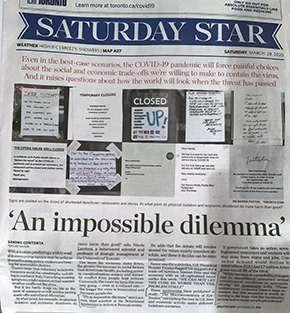 North America is now weeks into governmental measures to keep “non-essential” businesses closed and to keep people in their homes. Fears and anxiety caused by the initial hoardings of toilet paper and other goods now are having to share the stage with fears and anxiety caused by the inevitable deepening economic devastation caused by those measures.
Faced with the rise of the latter fears, politicians are beginning to worry. On one hand, they have told the populace that it is right for us all to sacrifice for the good of the people who are vulnerable to the disease caused, in some, by the Coronavirus: Covid-19. On the other hand, it is becoming increasingly obvious to all that the government’s shut-down of the economy is not practical. The question for politicians is: How do I now justify ending the governmental policy that I’ve already told everyone is the right and moral thing to do without being morally condemned for it? Alternatively, how do I justify not ending the shut-down without looking like I’m impractical? Read more
Defamation Laws and the Mythical “Right to Freedom of Speech”
November 11, 2017 by Paul McKeever · Comments Off on Defamation Laws and the Mythical “Right to Freedom of Speech”
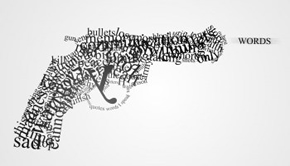 Despite loose talk to the contrary, there is no moral “right of free speech”. It is only when one sets up a “right” of “free speech” that one then has to somehow explain how defamation laws – which involve making a liar pay damages to a person about whom he has told a lie – are not a violation of the “right of free speech”. Typically, the explanation ends up involving another made-up “right” that must be “balanced” against the “right” of “free speech”, or that somehow constitutes a exception to the “right of free speech”. The result of such explanations, inevitably, is that someone asserts that the “right” of “free speech” is “not absolute”. This devolves further into a greater, and more harmful generalization: that “rights are not absolute”. The end game is something akin to s. 1 of Canada’s Charter of Rights and Freedoms, which states that “The Canadian Charter of Rights and Freedoms guarantees the rights and freedoms set out in it subject only to such reasonable limits prescribed by law as can be demonstrably justified in a free and democratic society“. In other words, one ends up with constitutional laws that say you have rights, but that they’re not absolute. More succinctly: that you have no rights at all.
It therefore comes to me as a disappointment that none other than the Director of Legal Studies at the Ayn Rand Institute, Steve Simpson (who is usually a great advocate of Ayn Rand’s philosophy, Objectivism) has defended defamation laws by asserting that one has a “right” to the value of one’s own reputation: Read more
Why you’re a target of “soul destroyers” at work
April 4, 2017 by Paul McKeever · Comments Off on Why you’re a target of “soul destroyers” at work

A friend of mine asked “At your workplace, do the happy people become targets for the soul destroyers? Why is that?” I replied as follows.
Okay, you caught my attention with that one.
Hitler and Nazism: “Left Wing” or “Right Wing”?
November 15, 2016 by Paul McKeever · Comments Off on Hitler and Nazism: “Left Wing” or “Right Wing”?
 Your “right wing” acquaintances assert that Hitler and his Nazis were left-wingers, but your “left wing” acquaintances assert that Hitler and his Nazis were right-wingers. If you have spent a significant amount of time debating such things, you have probably observed that both sides believe themselves to be correct. Well, why do they each believe themselves to be correct? And which of them is correct? Read more
Judging people by their code of ethics is not tribalism
June 15, 2016 by Paul McKeever · Comments Off on Judging people by their code of ethics is not tribalism
 In the aftermath of the Orlando massacre of June 12, 2016, the Ayn Rand Institute’s Elan Journo has written an article in which he condemns the positions of the presumptive presidential nominees of the two biggest political parties in the USA. Journo accuses both Hillary Clinton and Donald Trump of failing “to understand the centrality of philosophic ideas in animating the jihadist cause”, and he sums-up Trump’s proposed ban on immigration by Muslims as “tribalism”. I am sympathetic about what he says about Clinton, but I think he gets this one wrong with respect to Trump. Read more
Race, Gender, Sexual Orientation, and Self-imprisonment
May 17, 2016 by Paul McKeever · Comments Off on Race, Gender, Sexual Orientation, and Self-imprisonment
 There is no such thing as “race”, though we all have different genetic make-ups.
There is no such thing as “gender”, though most of us have either a penis or a vagina.
There is no such thing as “sexual orientation”, though some of us are sexually attracted to both sexes, some are sexually attracted to one sex much more than the other, some are sexually attracted exclusively to one sex, and many are sexually attracted to nobody at all. Read more
Now is not the time…
April 8, 2016 by Paul McKeever · Comments Off on Now is not the time…
Listen for it, dear citizen: the most important phrase in the verbal toolbox of hypocritical, morally-corrupt, or dishonest politicians; the phrase that feigns now to be objection, but serves later to be an endorsement.
The phrase: “Now is not the time…”
How to understand politics better
April 2, 2016 by Paul McKeever · Comments Off on How to understand politics better
 Five things to remember about people, politics, and political phrases (by no means a complete list, and in no particular order):
When they demand respect, they demonstrate that they lack what is needed to command respect.
It’s not a “hand-up” that they want. It’s a take-down.
When they say “Share the wealth”, they mean “Share the misery.”
When they say “Together, we will…”, they mean: “You shall…”. You, and you alone, for them, or else.
When they say “We’re all in this together”, the “this” they’re referring to is your wallet…and not theirs.
Bombings in Brussels: Everything you’ll read about them, in one tiny article
March 22, 2016 by Paul McKeever · Comments Off on Bombings in Brussels: Everything you’ll read about them, in one tiny article
 Earlier today, explosions “rocked the Brussels airport and subway system, killing at least 28 people and injuring many more“…but we cannot be certain of the bombers’ motive, and ultimately this is a response to something awful we’ve done in another country (for oil…or, something money-related), and religion certainly had nothing to do with it, and the bombers were mentally ill, and they were odd, and “real” people of their religion (possibly Christianity or Judaism or Buddhism…we can’t rule that out) would never do such a thing, and saying otherwise is racist (even though religion has nothing to do with race), or isolationist (even if you are pro-immigration), or “privilege” and “patriarchy” (because, well, what isn’t?), or….whatever….and we should respond by turning the other cheek, and taking our troops out of the Middle East, and telling would-be attackers that we mean no one any harm so, please, please, don’t hurt us (pretty please, we’ll be nice). In short: nothing to see here folks. Move along. Everything is double-plus good.